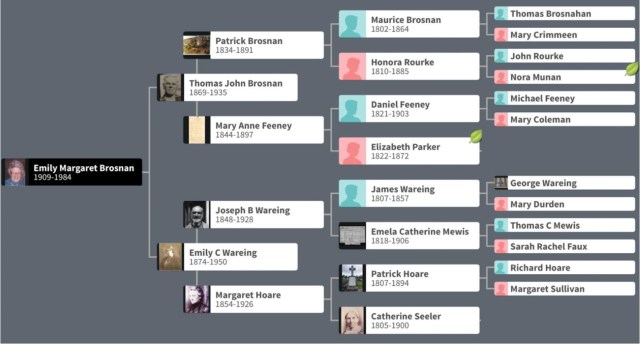
Catherine Seeler (1805) and Patrick Hoare (1807) were both born in Abbeydorney (“Monastery of the clan of Torna”). This is a village located 9 kilometres north of the town of Tralee, County Kerry, Ireland. They married in 1826 and are my great great great grandparents.
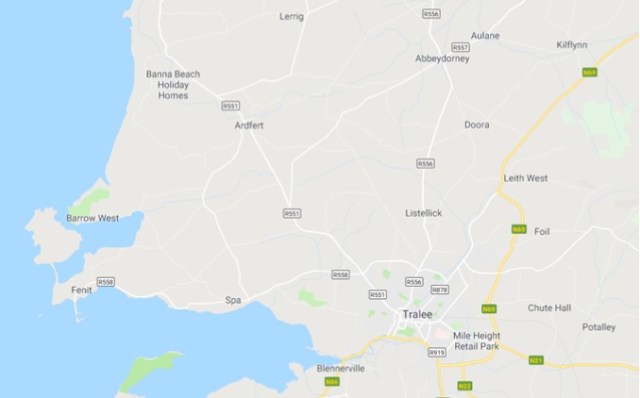
The family lived on and worked a 68 acre tenant farm at Dromcunnig (between Abbeydorney and Tralee). This was a good sized farm in the Irish setting, but as Patrick was only a tenant, he was open to the loss of his tenancy at any time with no compensation for any improvements to land or buildings which he might have made. The Irish at that stage were not allowed to own land.
They started their family: Richard (1835-1905), Mary (1836-1885), Denis (1829-1904) and finally my great great grandmother Margaret (1854-1926).
A disaster took place that was to change the face of Ireland forever. The potato crops were the main source of food for Irish peasants, and they failed when affected by a fungus. Coupled with a lack of response from the ruling English politicians, this caused a great famine lasting from 1845 to 1849, and caused many deaths from starvation and disease, as well as encouraging large-scale emigration. Secondary effects of the famine were a big decline in the practice of traditional Irish customs, and a big reduction of the number of small land holdings.
Patrick and Catherine’s oldest son Richard, having travelled to Scotland to find work, heard about emigration to New Zealand and decided that he would embark on what was ultimately to be the whole family’s new endeavours. In June 1860 Richard left Glasgow, sailed to New Zealand and arrived into Port Chalmers on 3 September.
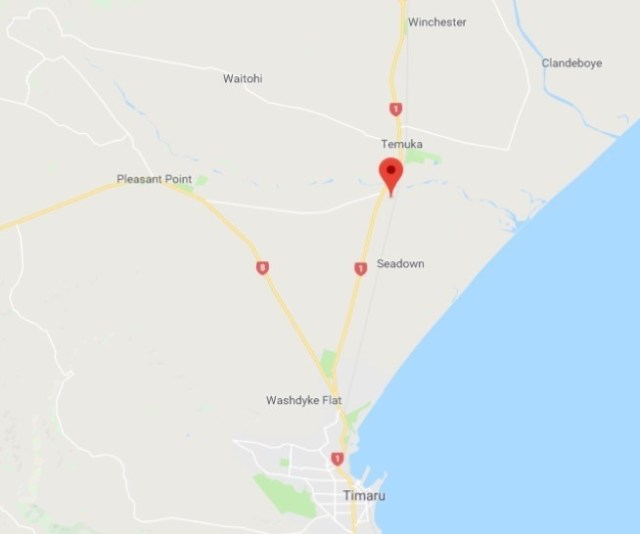
After being relatively fortuitous in the Tuapeka gold rush in 1861, he moved to the Timaru area where he commenced farm labouring and then took up land of his own at the Levels on the south bank of the Opihi River.
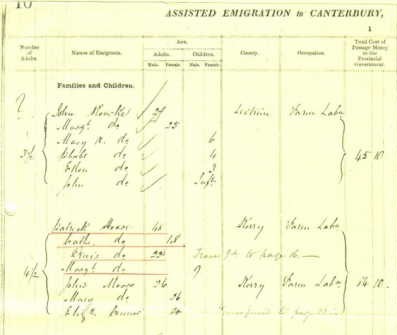
The Canterbury Provincial Government ran a nomination scheme, whereby persons already resident in Canterbury could nominate their family for a free passage to New Zealand. In this way, once one Irishman was through the net in this most Anglican of colonies, a whole family of Irish can make it through. Richard used this process to bring out his family.
On December 16 1862, the immigrant ship “Echunga” arrived into Timaru. On board were Patrick and Catherine Hoare and their children Denis Hoare (22), Mary (26), who by this time was married to John Moore, and Margaret (9).
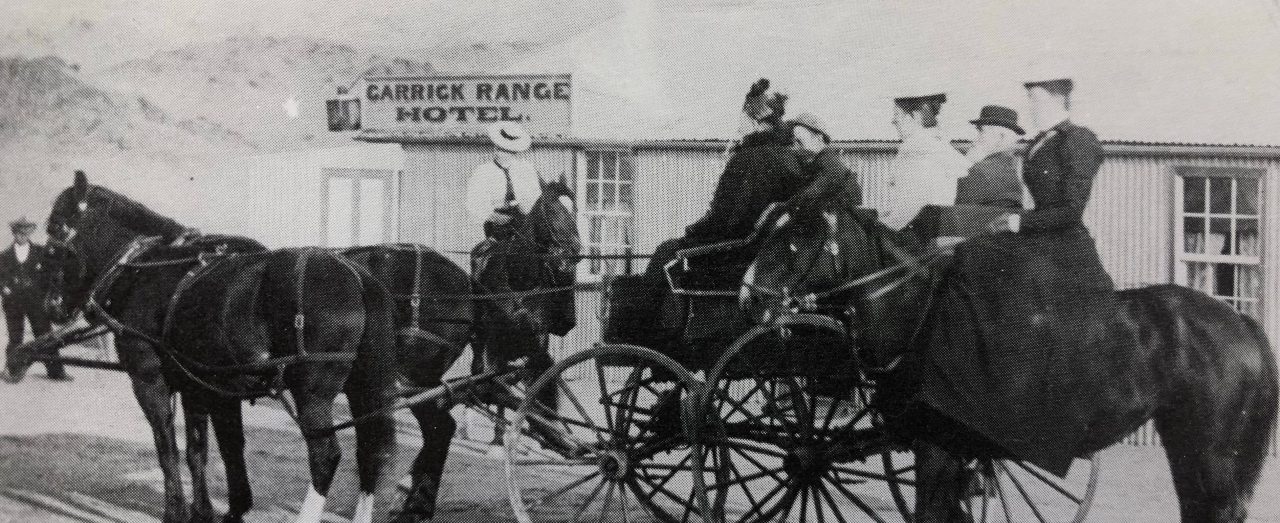
The migrant County Kerry folk (the Hoare’s, Moore’s, Brosnahan’s and others) purchased land close to Richard Hoare, and they called their community Kerrytown. This was not a town as such, but the name Kerrytown referred to the general area that the immigrants settled in. It did however, have a Post Office and a pub (which never had a license) and at its peak in the late 1880’s Kerrytown had 200 residents.
In February 1868, the Opihi River overflowed its banks and a major flood swept across the plain leaving a trail of damage and death. The flood did considerable damage, and the Hoare’s lost a large quantity of wheat and oats in stock, about £250 worth.
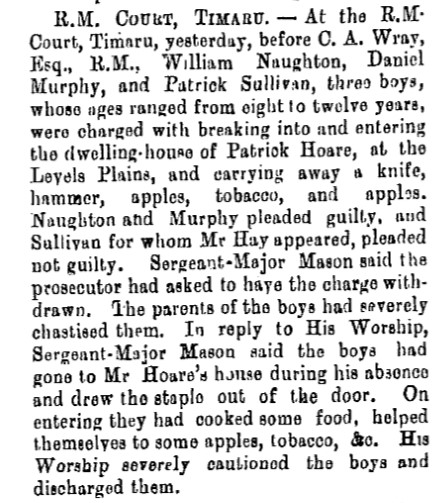
Patrick and Catherine were also the victims to being burgled and fortunately the three young lads were caught and somewhat dealt with.
Patrick suffered from a serious kidney condition called uremia (a major symptom of renal failure).
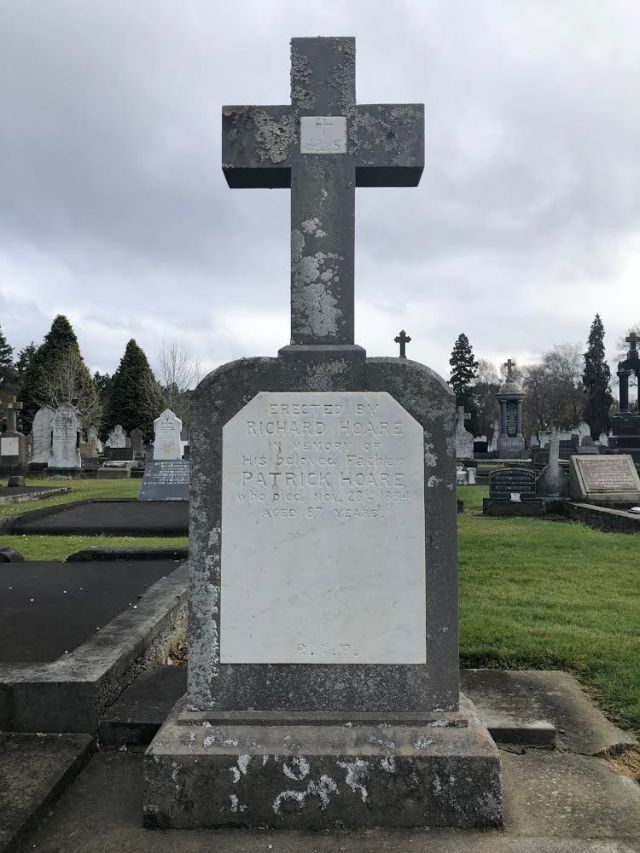
He passed away on 28 November 1894 at the age of 87.
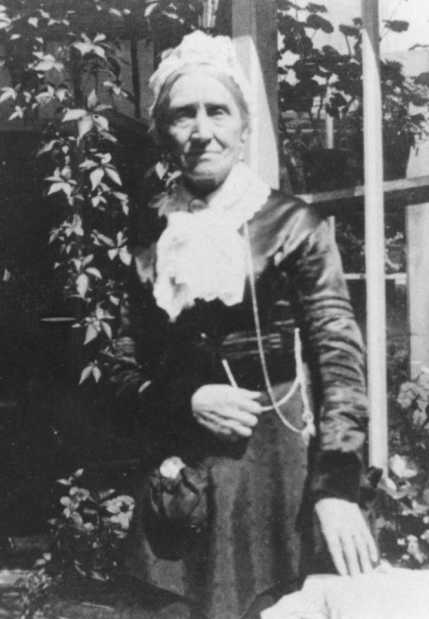
Despite having travelled from Ireland to London, and then sailing to New Zealand, it was well reported that in all of her time in Temuka she had never ventured further than 20 miles from her home. Her age also hadn’t slowed her down, however, slowly her health was also in decline as she suffered from bronchitis. She too passed away on 4 January 1900 at the age of 94. They are both buried at Temuka Cemetery (Row 212 Plot 119).
 Our Golden Pioneers